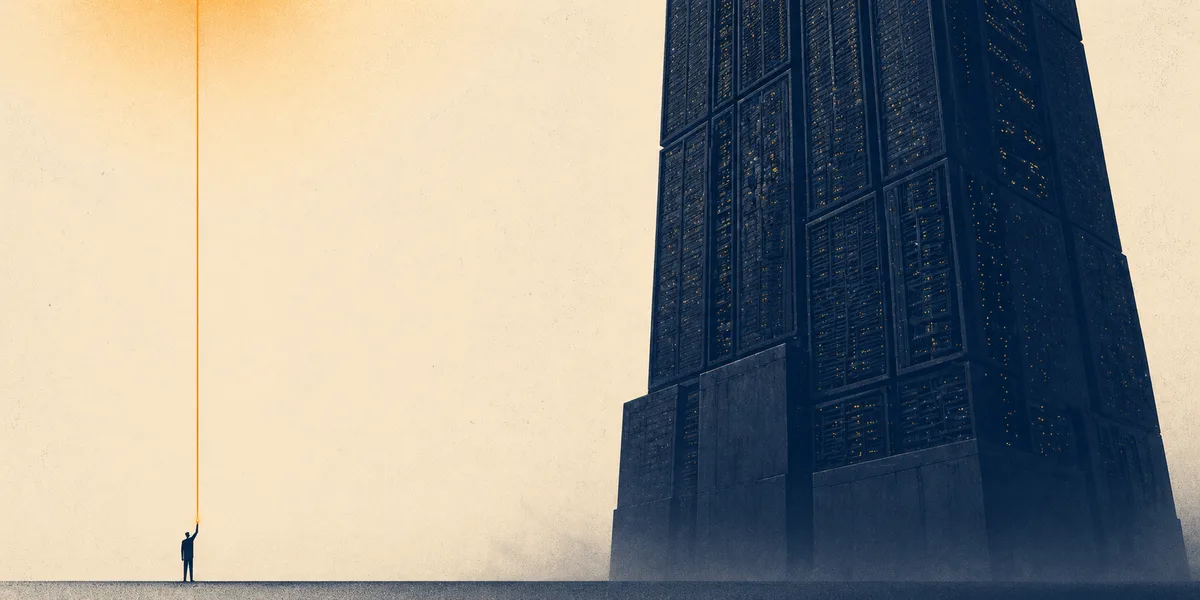
There’s an idea often associated with Elon Musk—that the most interesting outcome is the most likely outcome, at least as seen by whoever might be running the simulation. Not the safest outcome. Not the most efficient. But the one with the most tension, surprise, reversal, and consequence.
Baked into that is another idea modern culture can’t shake: that we might actually be living in a simulation.
What fascinates me is not whether either of these ideas is literally true in a technical sense, but how deeply both of them echo something far older than technology—the biblical view that reality is authored, not accidental.
Simulation as an Analogy, Not a Sci-Fi Claim
When people hear “simulation,” they usually picture The Matrix—humans plugged into machines, living in a fake digital world. Others take it more literally, making a probabilistic argument about recursive simulations: that any civilization capable of creating simulations will create many, making it statistically likely we’re already in one.
I’m not making either of those claims.
What resonates with me is simpler: none of us knows the true substrate of reality. We don’t know what the universe is ultimately “made of.” Physics keeps pushing deeper into abstractions that look less like physical matter and more like patterns, rules, and relationships between things.
So when I say “simulation,” I don’t mean fake. I mean constructed. Authored. A system with rules that originate outside the system itself.
The thing that struck me about The Matrix was a simple logical constraint: no matter how far you traveled inside the simulation, you could never reach the world outside it. The only way across that boundary was to be plugged in from beyond it.
The first time I saw that, I remember thinking: Oh—that actually explains something about God.
If God exists outside our universe—outside space, time, matter, and energy—then of course there is nowhere inside this universe you could ever physically travel to find Him. Heaven, hell, and the spiritual realm wouldn’t be distant locations. They would be entirely different orders of reality.
Seen this way, “simulation” becomes a powerful analogy—not for fake life, but for layered existence.
Simulation Theory Doesn’t Remove the Creator—It Demands One
A simulation still requires:
- An origin
- A designer
- An intelligence behind it
- A sustaining power external to the system
From my worldview, that Creator is the God of the Bible.
I’m not claiming simulation theory proves Christianity. But I do think it unexpectedly harmonizes with one of the Bible’s most basic starting points: reality is not self existent. It is created.
The Bible doesn’t argue this, it assumes it:
“In the beginning, God created…”
No defense. No debate. Just authorship.
God Writes a Dramatic Story, Not a Static World
Once you accept that reality is authored, a pattern emerges that is impossible to miss:
God chooses surprising outcomes over predictable ones.
God seems to prefer situations where His attributes—power, mercy, justice, wisdom—are most clearly revealed.
Creation exists for God’s glory and pleasure, not mere efficiency.
The Bible doesn’t present a mechanically optimized universe. It presents a narrative universe—one filled with improbable plotlines, reversals, and dramatic tension:
- A barren woman becomes the mother of nations
- A shepherd boy defeats a giant
- A baby in a basket overturns an empire
- God becomes human
- The Messiah is executed… and yet becomes King forever
If you were writing the world as a story, these are the interesting choices.
A predictable universe would be cleaner.
A narrated universe is richer.
God Deliberately Chooses the Unexpected So His Glory Is Revealed
Over and over, Scripture shows God intentionally creating more dramatic situations—not less.
One of the clearest examples is Gideon.
God reduces Gideon’s army from 32,000 soldiers to 300—not because He has to, but because He wants to remove every natural explanation for the victory:
“The people are too many… lest Israel boast, ‘My own strength saved me.’”
—Judges 7:2
This is almost a perfect biblical image of God choosing the more interesting scenario on purpose.
We see the same pattern everywhere:
- David chosen over his stronger brothers
“The LORD does not see things the way you see them.” —1 Samuel 16:7
- Joseph rising from slave → prisoner → ruler
An impossible, cinematic arc—yet Joseph later says:
“You intended to harm me, but God intended it all for good.” —Genesis 50:20
- The incarnation itself
In a boring universe, God stays distant.
In an interesting universe, God writes Himself into the story.
Why Free Will Exists at All
A fully controlled universe would be safer.
It would also be hollow.
If the Creator wanted a predictable world, He would have made robots.
Instead:
- He gives us at least some degree of free will
- He allows risk
- He allows rebellion
- He allows suffering
- He allows redemption
- He allows spiritual warfare behind the scenes
All of this creates a universe that is not the safest, but it is absolutely the most dramatically rich. In the Bible, God constantly works through chaotic and unexpected human choices to shape a meaningful story. Not in spite of freedom, but through it.
The Nature of the Creator Changes Everything
This is where the question of who God is becomes central.
The God of the Bible is not described with a single identity. He is simultaneously:
- A King, ruling with authority and purpose
- A Father, seeking real relationship with His children
- An Artist, who delights in beauty, complexity, and creativity
- An Author, who weaves broken threads into meaningful stories
And that tells us something profound.
Authors don’t write boring stories.
Artists don’t create empty canvases.
Fathers don’t want emotionless relationships.
Kings don’t rule meaningless kingdoms.
If God is all of these at once, then creation itself is not a cold machine—it is an expression of intention, character, relationship, and design.
From that perspective, the world doesn’t drift toward meaning by accident. It bends toward meaning by authorship.
Reframing “The Most Interesting Outcome”
The Bible does not teach that the most entertaining outcome always happens.
What it does teach is that the most revealing outcome unfolds—the one that most clearly displays who God is and what He is like.
The most meaningful outcome is often:
- Not the easiest
- Not the fastest
- Not the most comfortable
But it is the one that ultimately reveals the deepest truth about:
- Power
- Love
- Justice
- Mercy
- Brokenness
- Redemption
What Kind of World Are We Actually In?
If reality is authored, then our lives are not cosmic accidents, they are chapters. If God exists outside the system, then heaven, hell, and the spiritual realm are not “far away.” They are simply different layers of reality altogether. And if history consistently unfolds toward meaning rather than randomness, then the intuition behind simulation theory and the “interesting outcome” idea may be pointing to what Scripture has always claimed:
This is not a machine. This is a story.
But God isn’t a distant author watching for entertainment. He’s the central character. He wrote Himself in. The whole story—creation, fall, redemption, restoration—is about one thing: relationship with Him.
That’s what we’re actually in. Not a simulation to be escaped, but a story to be lived—with the Author Himself at the center of it.
⸻
PS: This article started with a question I typed into ChatGPT: “Is there any biblical support for Elon Musk’s ‘most interesting outcome’ idea?” What followed was a longer conversation than I expected—refining, pushing back, reshaping, until it became this.