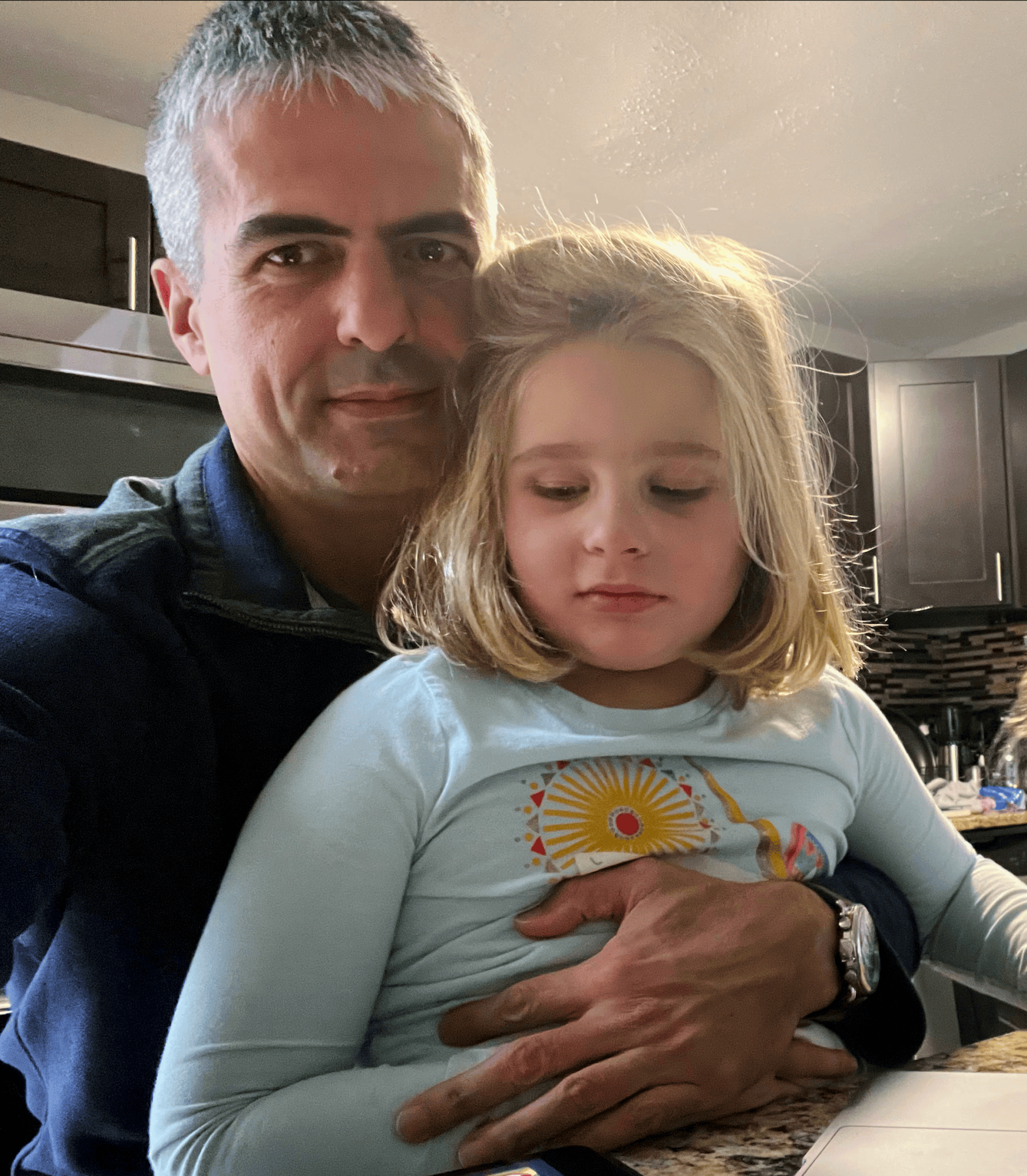
April is Autism Awareness Month, and it felt like the right time to talk about something deeply personal that I’ve been building. My daughter, Sydney, has autism and struggles with behaviors that are overwhelming for her — and for all of us — and we’ve spent years trying to navigate it as a family. Some days, it’s a 30 minute meltdown because someone opened a door she wanted to open herself. Other days, we’re stuck in the parking lot for 45 minutes because she refuses to get in her seat after leaving a store. Sometimes it’s sudden hair pulling, triggered by frustration, or something no one around her even understands. And then there are the quieter struggles, like taking 10 minutes to get toothpaste onto her toothbrush and melting down if you try to help.
We’ve been through it all — therapies, specialists, medication changes. Like many families in our situation, we’ve relied on medication to try and manage the most disruptive behaviors. But these aren’t mild meds. These are powerful drugs like antipsychotics with serious risks. Some cause significant weight gain, enough to put a child at risk for type 2 diabetes before they even reach puberty. Others have cognitive side effects: sedation, mental fog, slowed processing, and emotional flatness — just what these kids need, who are already behind in school. And then there’s the risk of permanent neurological tics — involuntary facial movements or body jerks that may never go away, even if the drug is stopped. My daughter already struggles to communicate, to fit in, to be understood. The thought that I could give her a drug that could leave her with a visible, lifelong condition that would make her feel even more isolated — just so she might lash out a little less — that just breaks my heart.
And the real kicker? After all that, you can still find yourself months down the road, facing the same behaviors — and no closer to knowing if the medication ever helped in the first place. The truth is, we’ve been flying blind. When the prescribing doctor asks, “How has she been doing?” we’re forced to compress weeks of complex, up-and-down behavior into a few vague sentences. There’s no data to compare. No real way to remember how things looked before versus after.
Engineers have a tendency to try and fix things, especially when the problem hits close to home. A while back, I built BestSelfApp with my friend Ryan Moseley — a simple way to track habits and live more intentionally. But at some point, it struck me: tracking data on myself was optional. Tracking it for Sydney wasn’t, because the stakes were much higher. Because when it’s your child’s behavior, your family’s ability to function, and your chance at anything resembling a normal life on the line, the payoff of even small improvements is enormous. That realization is what led us here.
The app we’re building helps parents of children with autism, ADHD, or other neurological or developmental conditions quickly capture what’s happening each day using voice journal entries. It uses AI to analyze those entries, identify patterns, and support better decisions around therapies, medications, and daily care. It also brings together input from your whole village — parents, teachers, therapists, caregivers — so you’re getting additional perspectives and critical data from the people who spend time with your child when you’re not there. They say it takes a village to raise a child. For families like mine, that’s not just a saying, it’s the reality. There are dozens of people involved in Sydney’s care, each with a piece of the picture. This app is designed to bring those pieces together.
It’s also a communication tool. In Sydney’s case, she sees multiple therapists who rarely get a chance to talk to one another. With the app, they can all see the same data, compare notes, and even use the built-in Ask AI feature to ask questions like, “What have other therapists been doing that works?” — and get real answers based on everything logged by the people in her life. It’s like being able to chat directly with your child’s full history of journal entries and behavior data.
And when someone logs a journal entry, the app sends a real-time push notification — giving you a short headline that distills what happened in just a few words. Even without opening the app, you can stay in the loop as the day unfolds. For example, when her behavior technician at school logs an update, I’d get a push notification and know if it was a good day, bad day, or something unexpected — before she even walks in the door.
When I first started building this, I thought the severity of behaviors we were dealing with was rare. But I’ve since learned that it’s far more common than I ever realized. Over 750,000 children in the U.S. are prescribed antipsychotics to manage severe behavioral issues like aggression and self-injury. And antipsychotics are just one category of heavy duty meds used in these cases. Based on medication data alone, even accounting for overlap, we’re talking about roughly 2 million children navigating behavior intense enough to warrant serious medical intervention.
That’s thousands of families making medication decisions under pressure — with little clarity, little support, and little sense of whether anything is actually working. What we’re building isn’t an app to optimize behavior. It’s basic infrastructure families need to have in place to collect real day-to-day data against medications and therapies so you’re not walking into doctor’s appointments empty handed, trying to recall the past month from memory. Instead you’ll have data on what’s working and what’s not, be able to make better care decisions for your child and hopefully see a meaningful improvement in the wellbeing of your whole family.
How you can be part of it
The app will launch this summer, but there are a few ways to get involved now:
Join the waitlist
Visit villagemetrics.com and drop your email. We’ll let you know the moment we go live.
Become a founding supporter
We’re offering lifetime access for a one-time fee to early adopters. Once we launch, VillageMetrics will be a paid-only app (with a free trial). This is a chance to lock in lifetime access before subscriptions begin.
Spread the word
If you know a parent, therapist, or caregiver who could benefit from this, I’d be so grateful if you’d share it with them.
And if you want to reach out — whether to reconnect, offer feedback, share your thoughts, or just say hi — I’d really love to hear from you.
– Doug